Launch offer — valid today only

📄 Digital book in PDF · read it on your phone or print it

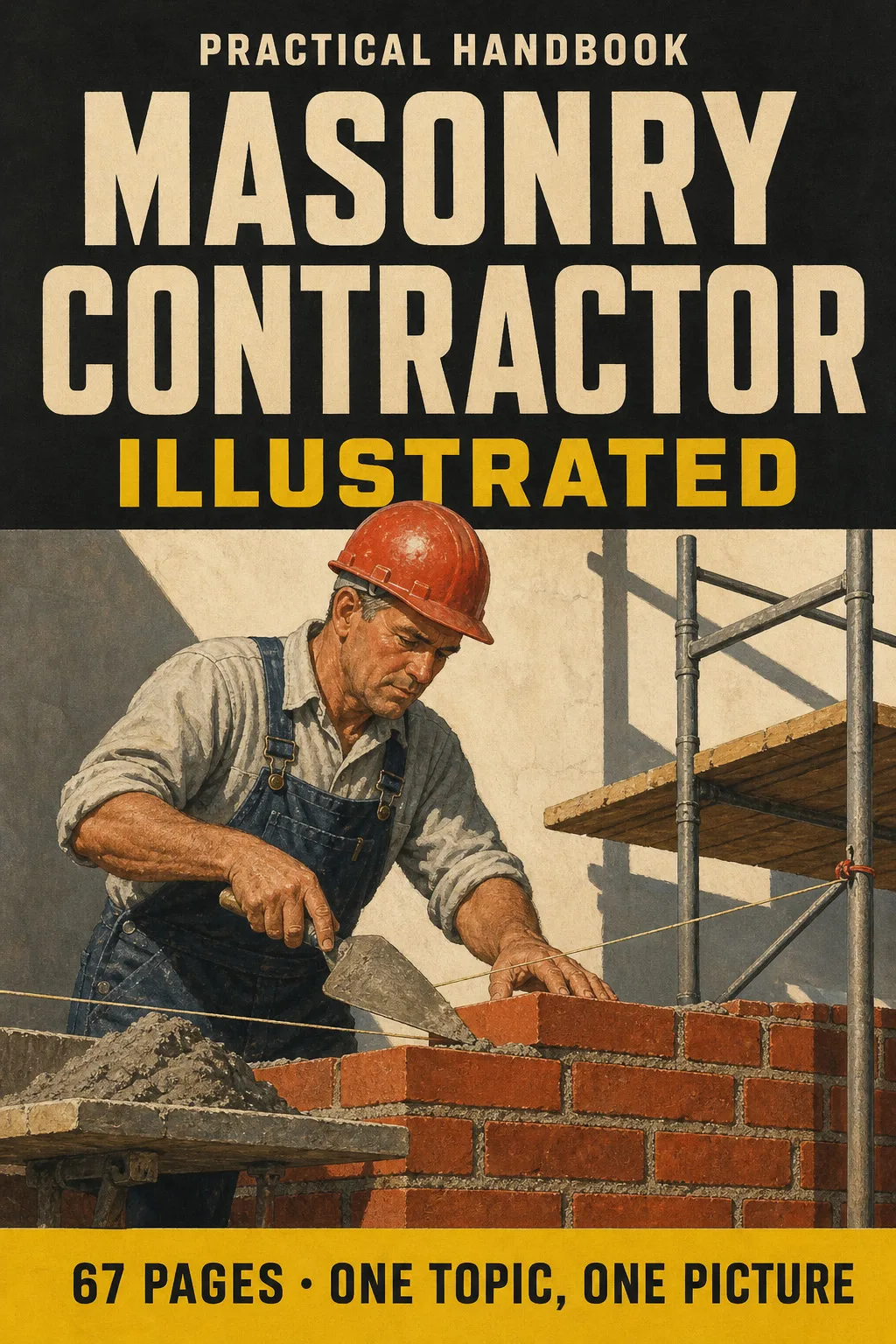
Masonry Contractor Illustrated: Every Code Number You Need, Drawn One Topic on Every Page

Brick positions, mortar types, CMU, grout lifts, cleanouts, veneer ties, flashing, cold-weather rules and takeoffs. Each topic gets its own page: the drawing first, then what you need to remember. 67 illustrated pages.

START STUDYING THIS WAY

🔒 Secure checkout · PDF by email · 30-day guarantee

Every topic, its own pageEach wall detail drawn, with the explanation right beside it
67 illustrated pages8 parts, from nominal vs. actual size to a study plan for busy masons
Up-to-date sourcesChecked against TMS 402/602-22, ASTM C270 and the 2024 IBC/IRC
PDF by emailFormat

Look Inside the Book

Every page has one big drawing and a box with the numbers you need to know:

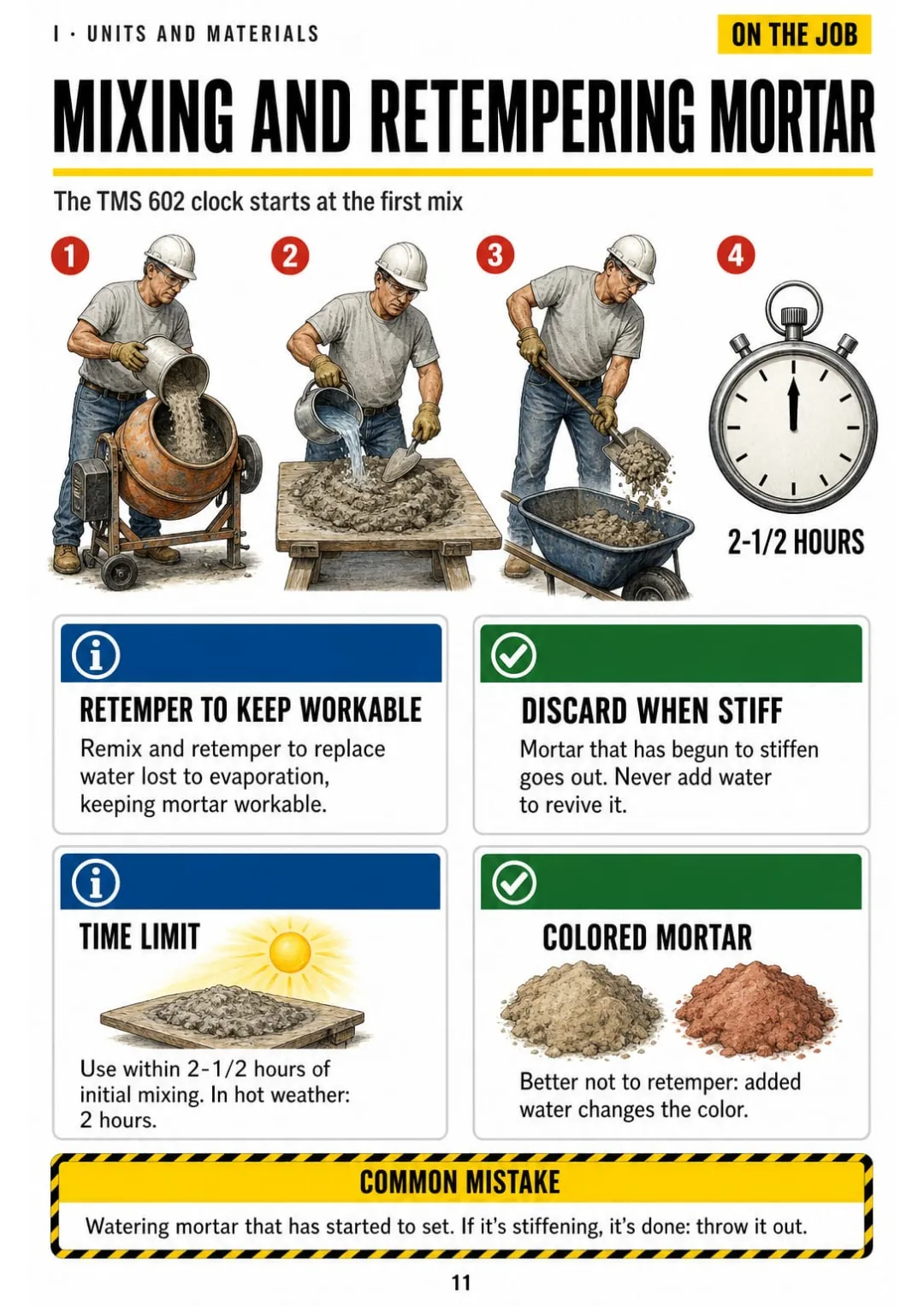
TMS 602: use mortar within 2-1/2 h of first mix (2 h in hot weather)
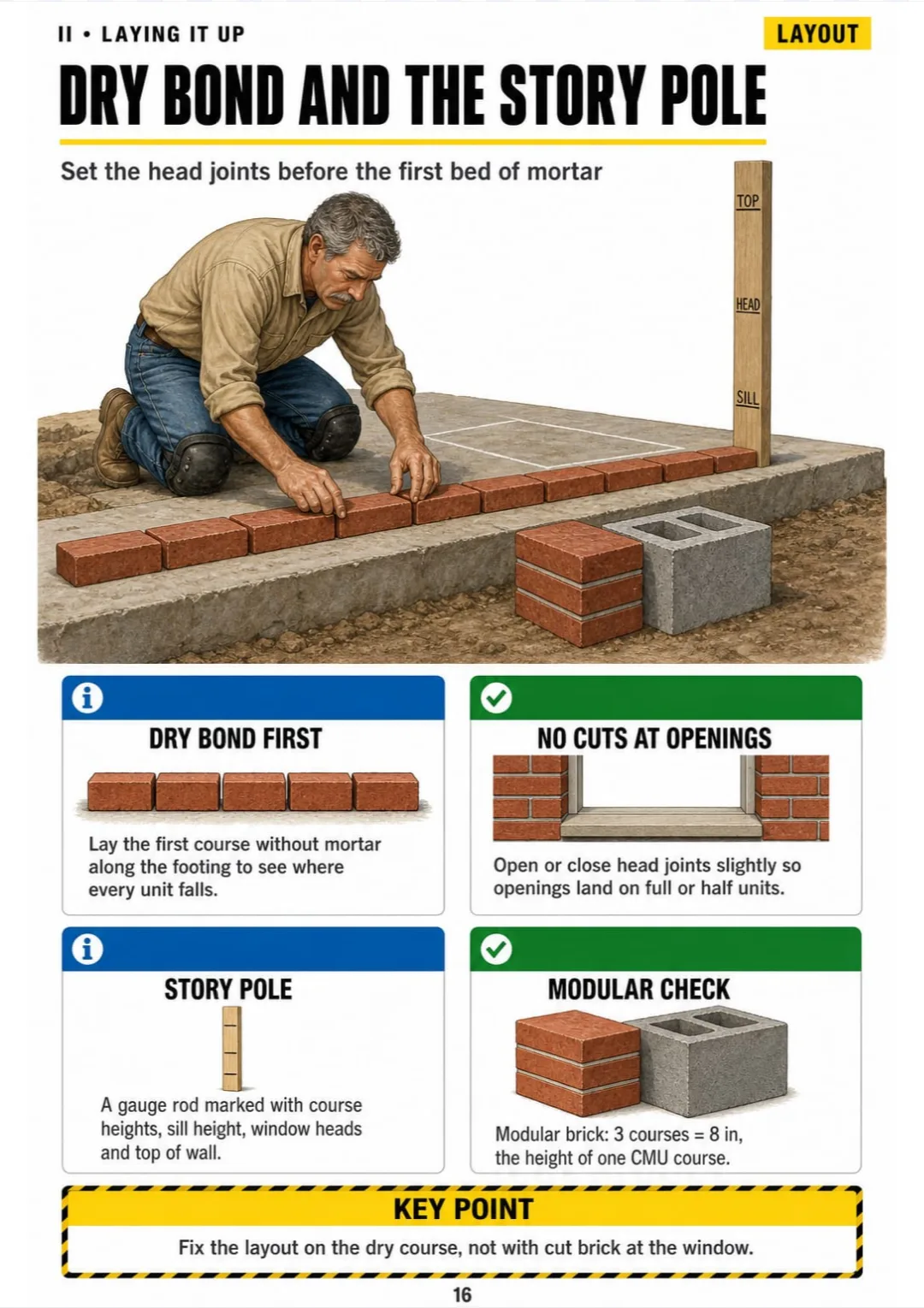
Dry bond and story pole: course heights, sills and heads marked before mortar
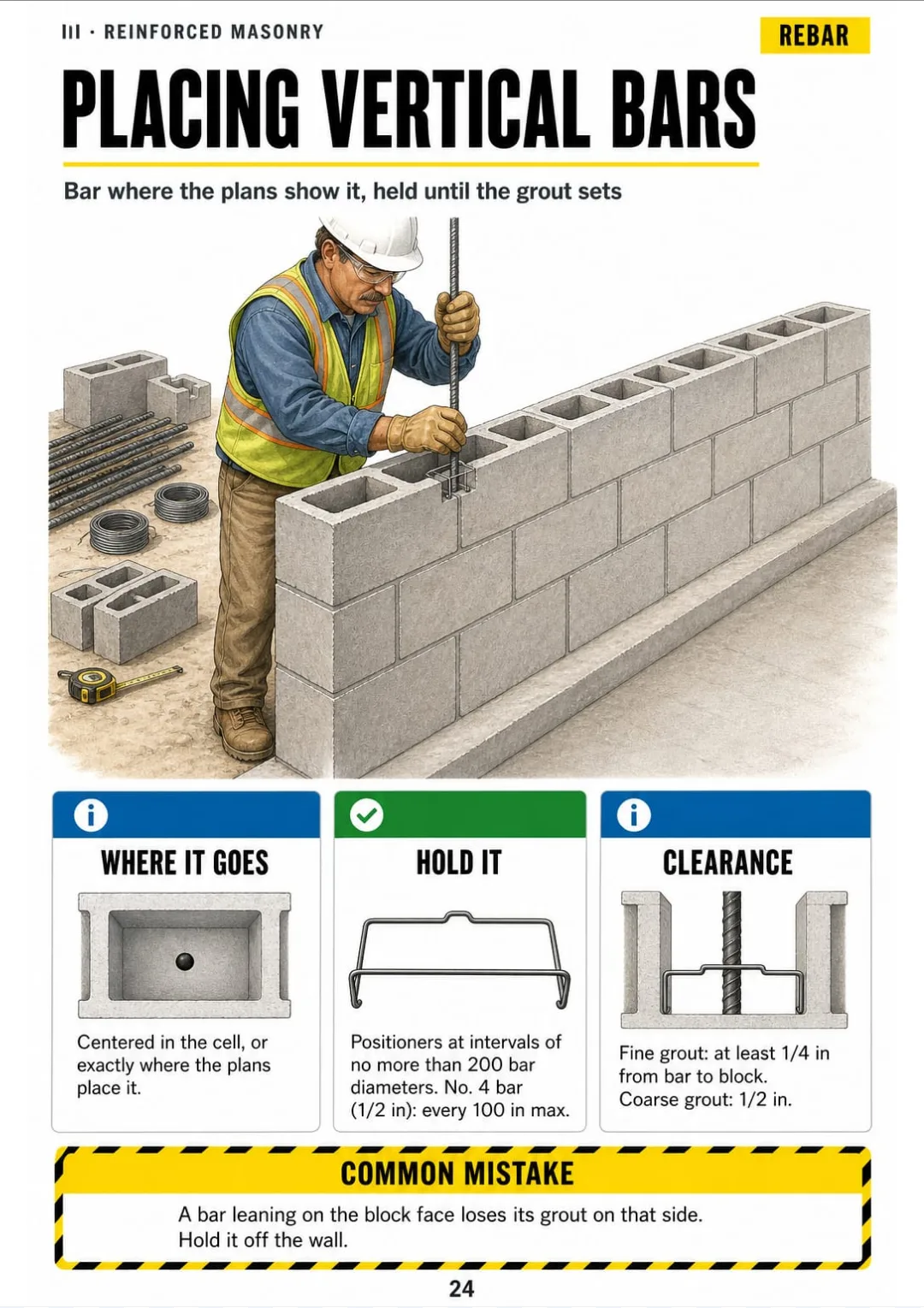
Hold vertical bars at least every 200 bar diameters, with 1/4 in clearance to the block.
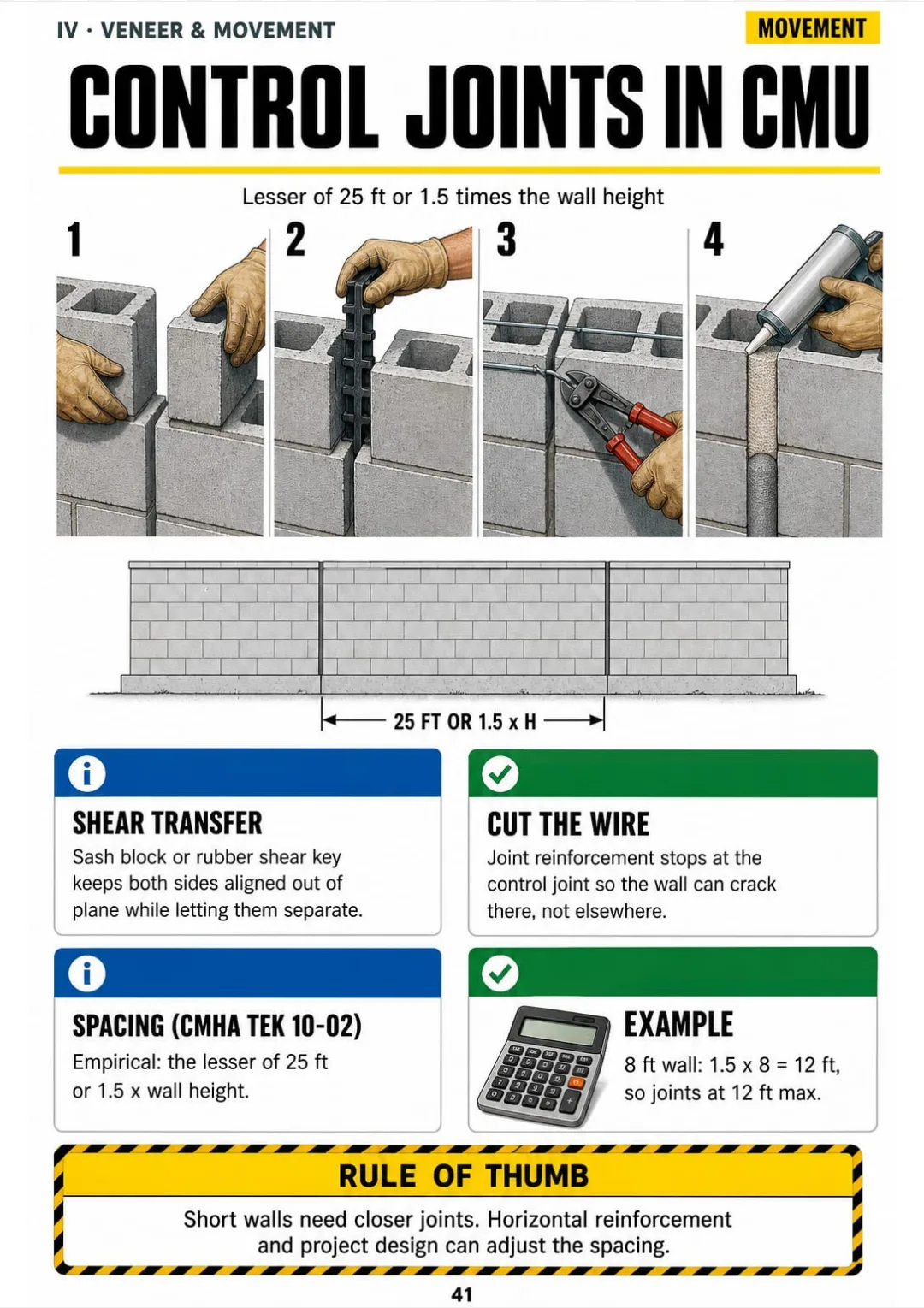
CMU control joints: shear key, interrupted joint wire, sealant; lesser of 25 ft or 1.5 x height.
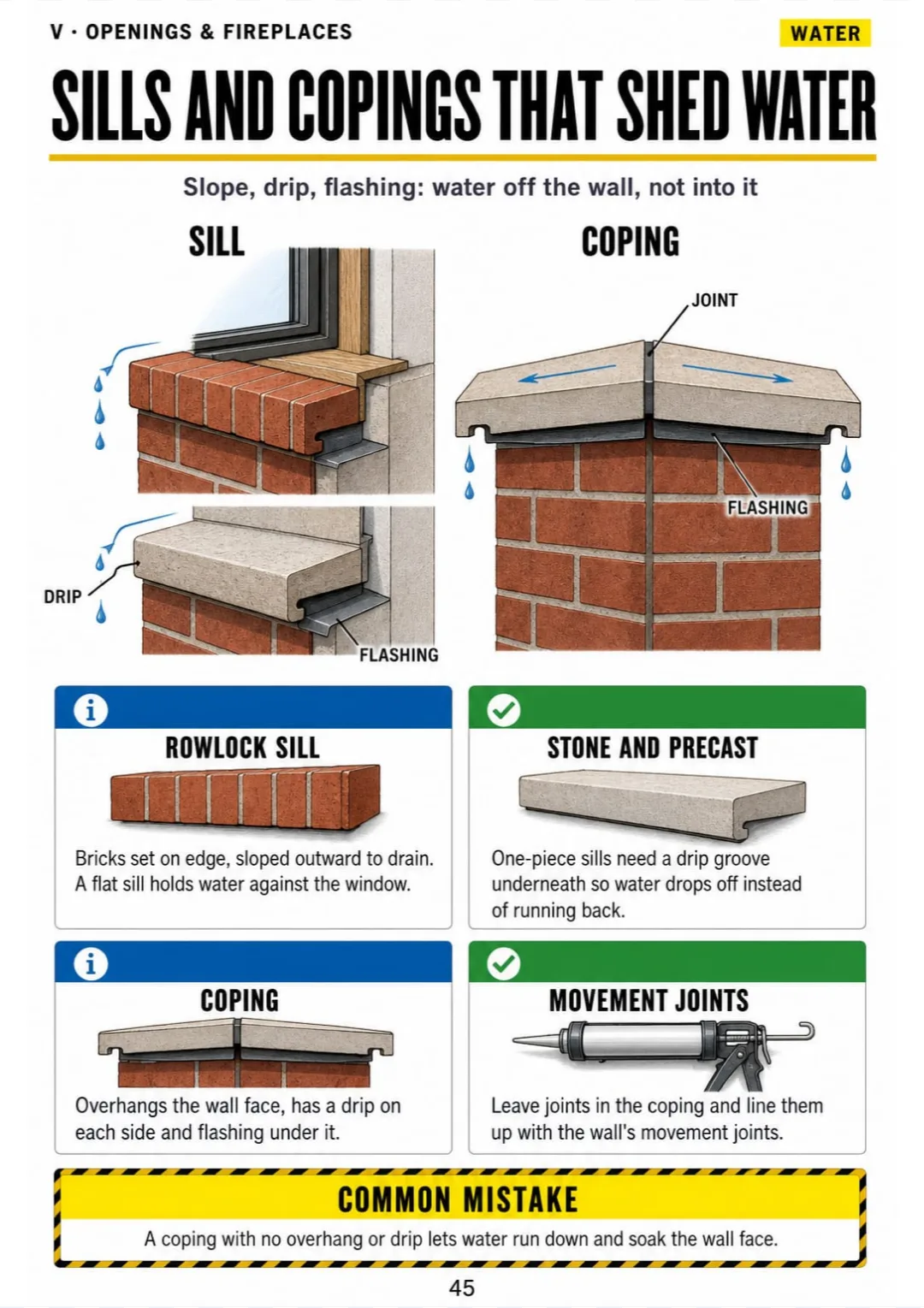
Rowlock sills sloped to drain; copings with overhang, drip, flashing and movement joints.
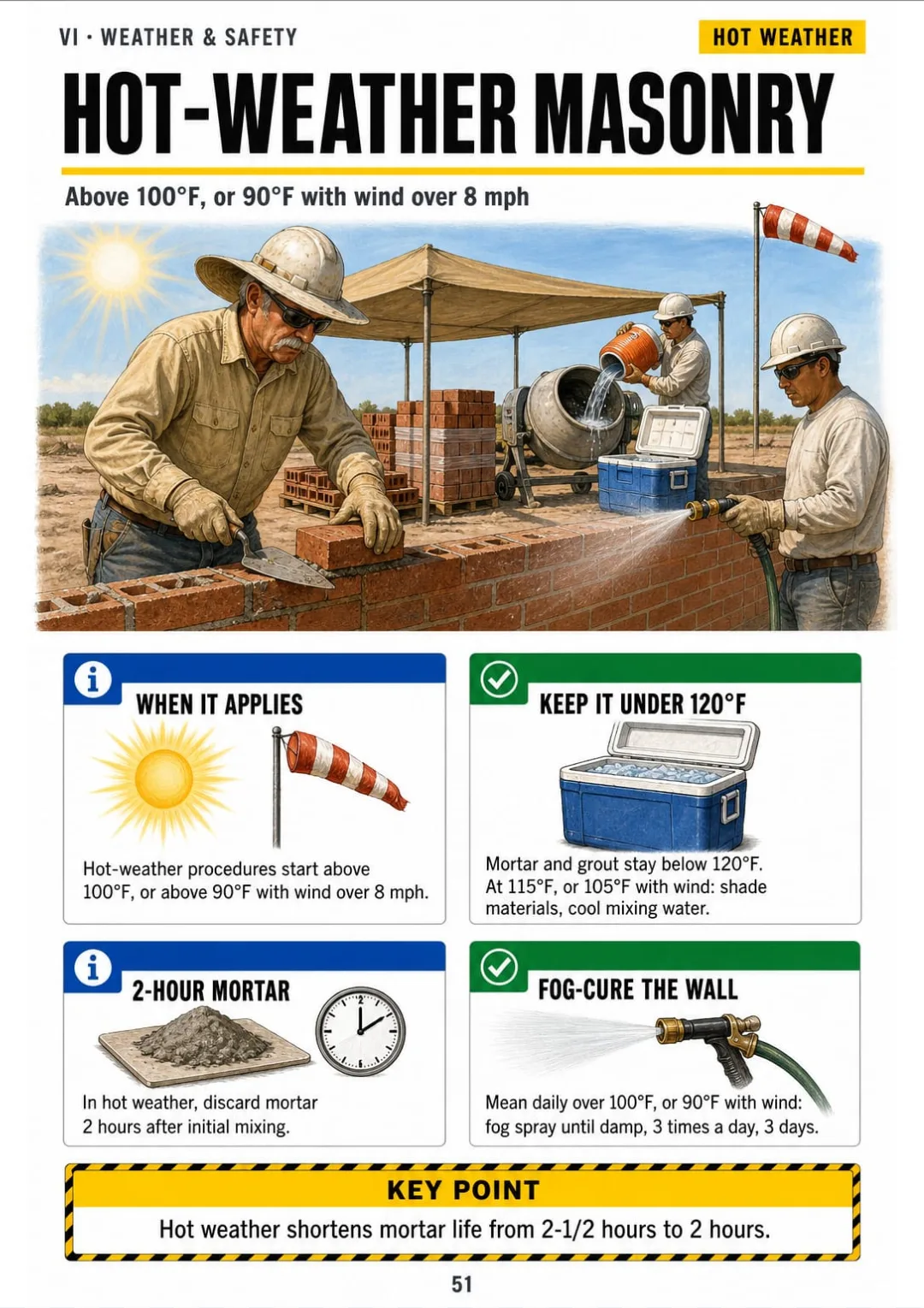
Above 100°F (or 90°F + 8 mph wind): mortar under 120°F, discard at 2 h, fog 3x/day for 3 days.
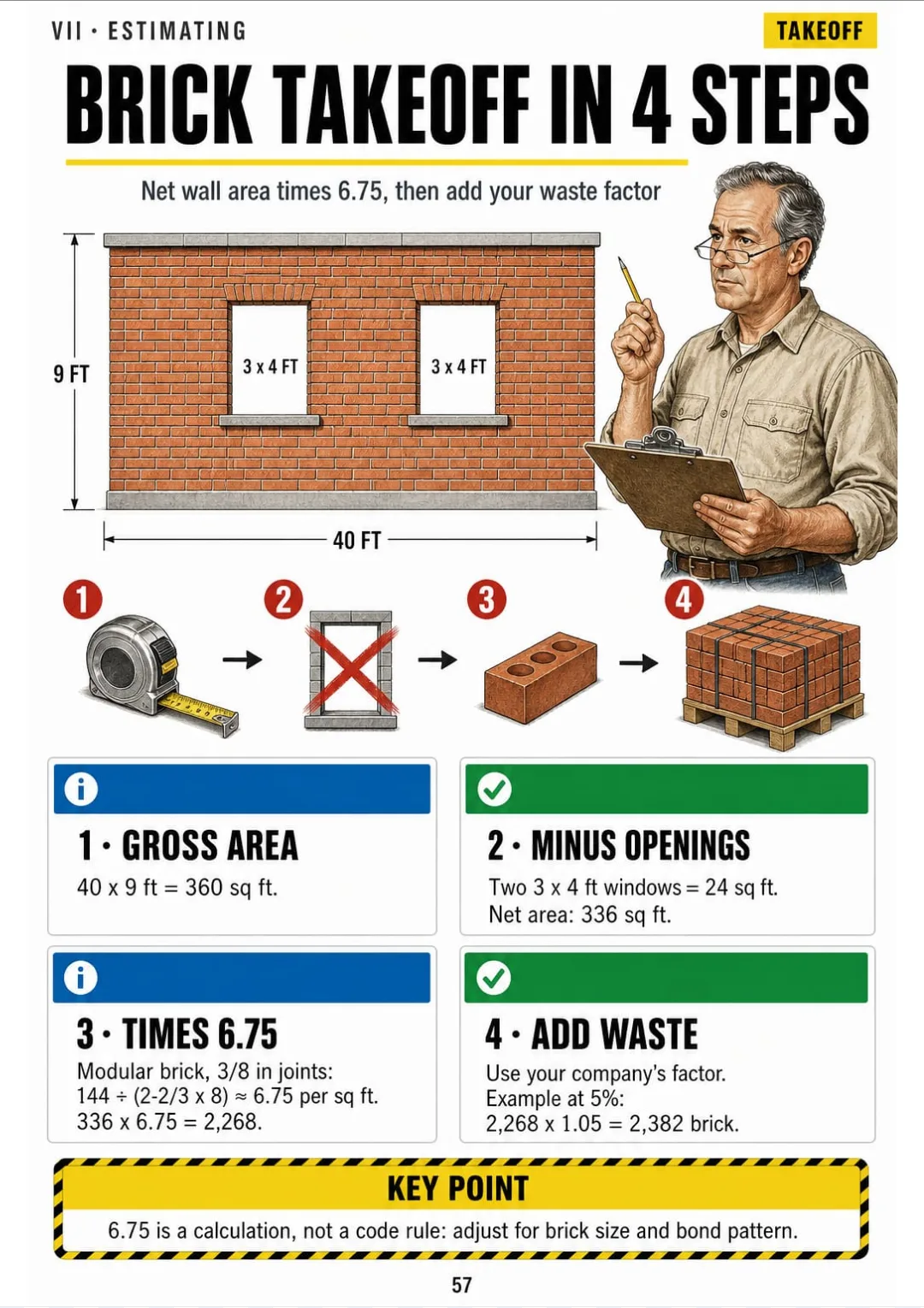
40 x 9 ft wall, two windows: 336 sq ft x 6.75 = 2,268 brick before waste.
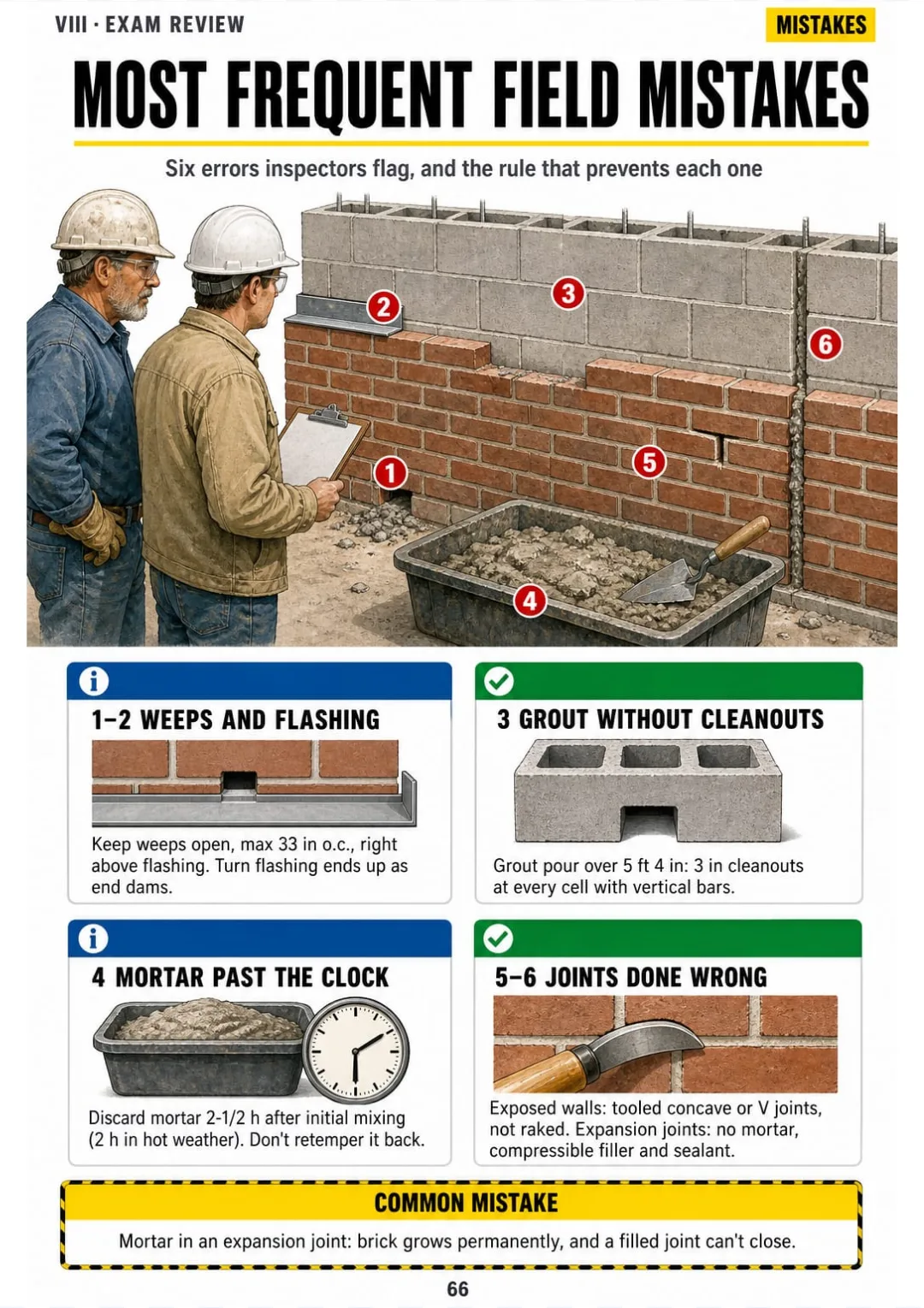
Blocked weeps, no cleanouts, mortar past 2-1/2 h: six mistakes and their fix

Swipe to see more →

These are real pages from the book. The table of contents is the full one: 8 parts and 63 topics.

The Problem Isn't You. It's How It Was Explained to You.

You're looking at a practice question about a block wall in Seismic Design Category C. It asks how far apart the vertical bars can go. You've grouted hundreds of cells like that, and you still hesitate.

The manual covers it in long paragraphs: bar size, spacing, openings, wall ends, exceptions. By the third line, the numbers start to blur.

Hold vertical bars at least every 200 bar diameters, with 1/4 in clearance to the block.

In the book, that same wall is one drawing: the CMU wall, the No. 4 bars standing in their cells, 10 ft max marked between bars and 16 in marked on each side of the opening.

Lap splices, bond beams, cleanouts, grout lifts and veneer ties work the same way. Each one has its own page.

You see the wall, you get the rule, and you answer without going back to the manual.

COMPARE FOR YOURSELF

Same Topic, Two Ways to Study It

THIS
  • The manual: line after line
  • Brick positions explained only in words
  • You walk into the exam still unsure
A brick unit may be placed in the wall in six orientations, defined by which face is exposed and whether its longest dimension runs horizontally or vertically. A stretcher is laid flat with its long narrow face exposed, parallel to the wall; a header is laid flat with its end exposed. A rowlock is laid on its long narrow edge with the end exposed, whereas a soldier stands on end with the narrow face exposed. A sailor stands on end with the broad face exposed, and a shiner lies on edge showing its broad face.
FOR THIS
  • All six brick positions in one drawing
  • Each name and its exposed face in a labeled box
  • You see it, and you get it
Dry bond and story pole: course heights, sills and heads marked before mortar
CONTENTS

Take a Look at the 8 Parts and 63 Topics

Units and materials, laying it up, reinforced and grouted masonry, veneer and moisture, openings and fireplaces, weather and safety, estimating and the business side, and a final exam review: 67 pages, all illustrated.

IUnits and Materials · pp. 5-13
  1. Nominal vs. Actual Size
  2. Clay Brick: Grades and Types
  3. Concrete Block (CMU)
  4. Stone: Ashlar, Rubble and Veneer
  5. Mortar Types M, S, N, O
  6. Mortar by Proportion
  7. Mixing and Retempering Mortar
  8. Grout Is Not Mortar
  9. Reinforcement and Accessories
IILaying It Up · pp. 14-22
  1. Brick Positions
  2. Bond Patterns
  3. Layout: Dry Bond and the Story Pole
  4. The Sequence: Leads, Line, Gauge, Joints, Tooling
  5. Bed, Head and Collar Joints
  6. Mortar Bedding for CMU
  7. Joint Profiles
  8. Corners, Piers and Pilasters
  9. Multi-Wythe Walls
IIIReinforced and Grouted Masonry · pp. 23-32
  1. Why Masonry Gets Reinforced
  2. Placing Vertical Bars
  3. Lap Splices and Dowels
  4. Bond Beams
  5. Grout Space and Cell Size
  6. Grout Pour vs. Grout Lift
  7. Cleanouts
  8. Consolidating Grout
  9. Masonry Cover for Steel
  10. Anchor Bolts and Embedded Items
IVVeneer, Moisture and Movement · pp. 33-42
  1. Anchored Veneer in Section
  2. Veneer Tie Spacing
  3. Corrugated vs. Wire Ties
  4. Adhered Veneer
  5. Flashing: Where It Goes
  6. Weep Holes
  7. Brick Grows, Block Shrinks
  8. Expansion Joints in Brick
  9. Control Joints in CMU
  10. Efflorescence
VOpenings, Fireplaces and Special Work · pp. 43-49
  1. Lintels
  2. Arches
  3. Sills and Copings
  4. Masonry Fireplace: The Parts
  5. Hearth and Clearances
  6. Chimney Height: The 3-2-10 Rule
  7. Glass Block and Retaining Walls
VIWeather, Quality and Safety · pp. 50-56
  1. Cold-Weather Masonry
  2. Hot-Weather Masonry
  3. Plumb and Level Tolerances
  4. Testing and Inspection
  5. Wall Bracing and the Limited Access Zone
  6. Scaffolds and Falls
  7. Silica Dust
VIIEstimating and Running the Business · pp. 57-62
  1. Brick Takeoff
  2. Block Takeoff
  3. Mortar and Grout Quantities
  4. Labor and Bidding
  5. The License Exam: What It Covers
  6. Contracts, Liens and Insurance
VIIIExam Review · pp. 63-67
  1. Numbers to Know on One Page
  2. Words the Exam Mixes Up
  3. Read the Section Drawing
  4. Most Frequent Field Mistakes
  5. Study Plan for Busy Masons

One Page, One Topic, All Clear

Think of it this way:

It's 7 a.m., the mortar's mixed and the thermometer reads 38°F. You need the cold-weather rule right now, not a whole chapter.

You open the cold-weather page and it's drawn out: mortar kept between 40 and 120°F, materials never above 140°F, new masonry covered for 24 hours, grouted work for 48.

Rowlock sills sloped to drain; copings with overhang, drip, flashing and movement joints.

Same with mortar types M, S, N and O, grout lifts and cleanouts, veneer tie spacing, flashing over lintels and the brick takeoff: each one on its own page.

Masonry Contractor Illustrated is 8 parts and 63 topics, all drawn, with an exam review at the end: the numbers to know, the words the exam mixes up and a study plan.

What you see drawn, you don't have to memorize.

What's Inside Masonry Contractor Illustrated:

Ipp. 5-13

Units and Materials

Nominal vs. actual size, brick grades, CMU, stone, mortar types M, S, N and O, proportions, retempering, grout and reinforcement.

IIpp. 14-22

Laying It Up

Brick positions, bond patterns, dry bond and the story pole, the laying sequence, bed, head and collar joints, joint profiles, corners and multi-wythe walls.

IIIpp. 23-32

Reinforced and Grouted Masonry

Why walls get reinforced, vertical bars, lap splices, bond beams, cell size, grout pour vs. grout lift, cleanouts, consolidation, cover and anchor bolts.

IVpp. 33-42

Veneer, Moisture and Movement

Anchored veneer in section, tie spacing, corrugated vs. wire ties, adhered veneer, flashing, weep holes, movement, expansion and control joints, efflorescence.

Vpp. 43-49

Openings, Fireplaces and Special Work

Lintels, arches, sills and copings, fireplace parts, hearth and clearances, the 3-2-10 chimney rule, glass block and retaining walls.

VIpp. 50-56

Weather, Quality and Safety

Cold and hot weather, plumb and level tolerances, testing and inspection, wall bracing and the limited access zone, scaffolds and silica dust.

VIIpp. 57-62

Estimating and Running the Business

Brick and block takeoffs, mortar and grout quantities, labor and bidding, what the license exam covers, contracts, liens and insurance.

VIIIpp. 63-67

Exam Review

Numbers to know on one page, words the exam mixes up, reading a section drawing, the most frequent field mistakes and a study plan for busy masons.

At the end of the book: An exam review part: the numbers to know on one page, the words the exam mixes up and a study plan.
Plus: 2 Free Books

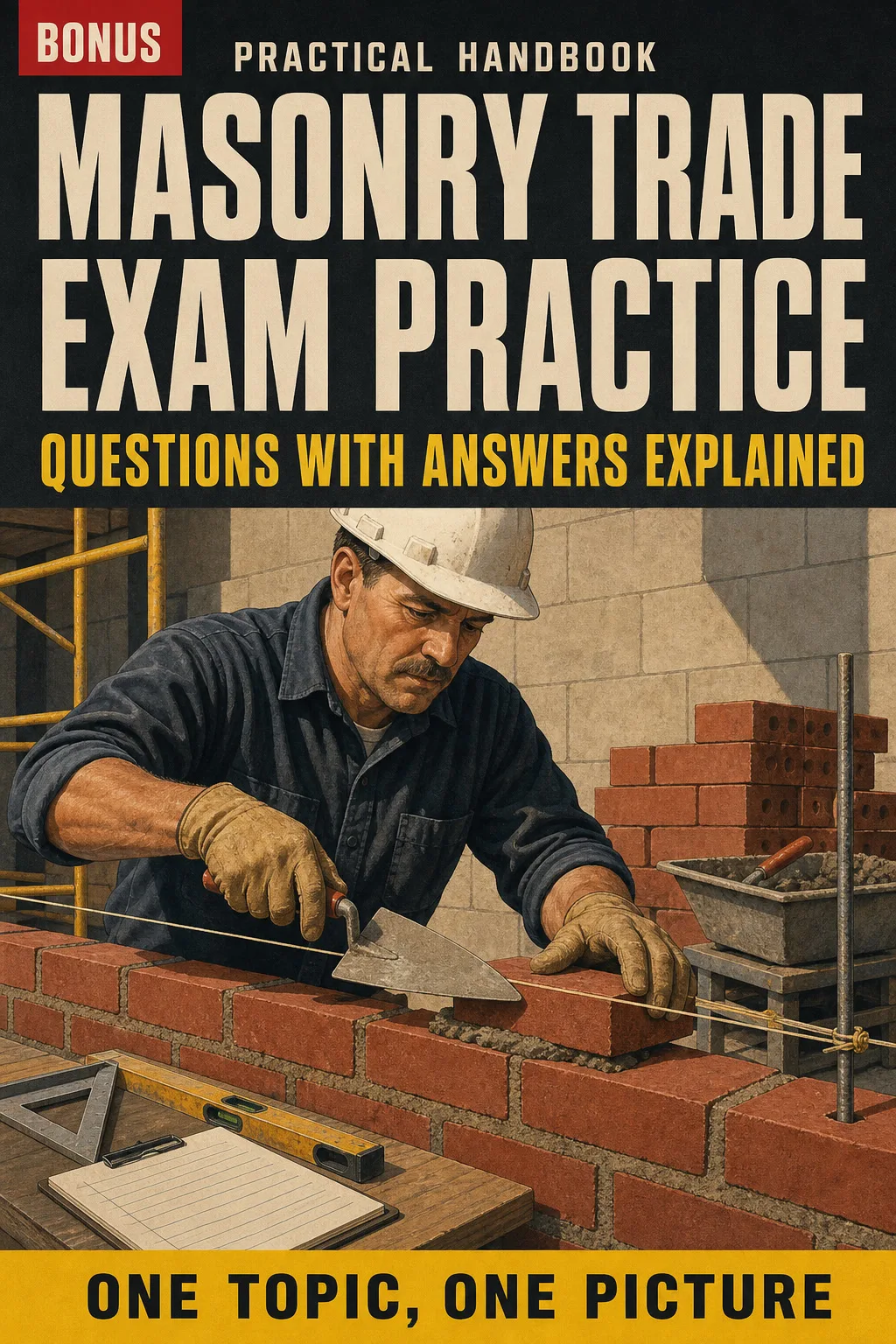
Masonry Trade Exam Practice: Questions with Answers Explained

BONUS 1: «Masonry Trade Exam Practice: Questions with Answers Explained»

Value on its own: US$ 17.90

Practice with exam-style questions on mortar, CMU, veneer and estimating, and every answer points you back to the page that explains it.

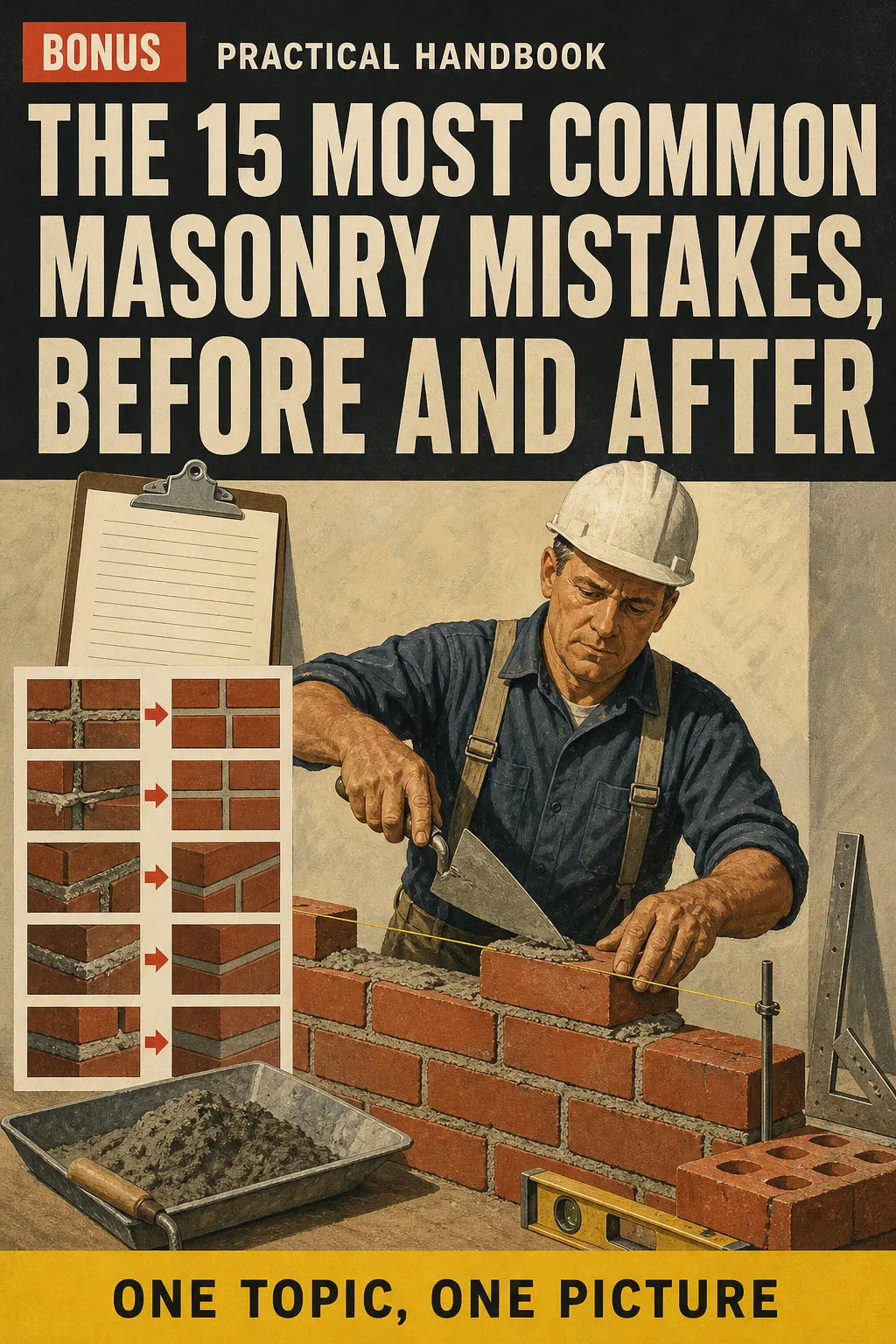
The 15 Most Common Masonry Mistakes, Before and After

BONUS 2: «The 15 Most Common Masonry Mistakes, Before and After»

Value on its own: US$ 14.90

See the wrong way and the right way side by side, from missing weep holes to grout lifts without cleanouts, so you can spot them on the job and on the test.

Masonry Contractor Illustrated with 2 Free Books

  • Masonry Contractor Illustrated: 67 illustrated pagesUS$ 63
  • BONUS 1: Masonry Trade Exam Practice: Questions with Answers ExplainedUS$ 17.90
  • BONUS 2: The 15 Most Common Masonry Mistakes, Before and AfterUS$ 14.90
  • High-resolution PDF to printIncluded
Total value US$ 95.80
YOUR PRICE:
US$ 27
You save US$ 68.80
YES, I WANT MASONRY CONTRACTOR ILLUSTRATED FOR US$ 27

📄 This is a digital PDF book sent to your email: nothing is printed or shipped.

Secure purchaseEncrypted payment30-day guarantee

PDF by email: We email you Masonry Contractor Illustrated as a PDF, together with the two free books. It's a single payment: no installments, no extra charges.

Who This Book Is For

You're getting back into the code

You're getting back into the code

You already know the work. Here you see it with the exact term the code uses, one short page at a time after the job.

Your license exam is coming up

Your license exam is coming up

Mortar, grout lifts, veneer and takeoffs are each drawn on their own page, and an exam review at the end puts the key numbers together.

You already run a crew

You already run a crew

Print the page and keep it in the truck: tie spacing, cold-weather rules and lintel bearing are there when you need them.

Everything You Get Today

US$ 95.80US$ 27
YES, I WANT MASONRY CONTRACTOR ILLUSTRATED FOR US$ 27

📄 This is a digital PDF book sent to your email: nothing is printed or shipped.

30DAYS
GUARANTEE

30-Day Guarantee

Try Masonry Contractor Illustrated for 30 days, bonus books included.

We refund everything if the file won't open, if the book isn't what you see here, if you were charged twice or if the email doesn't arrive. Just email us.

You pay once. No subscriptions.

Frequently Asked Questions

Is it for me if I've laid brick for years but haven't taken a written exam in decades?

Yes. It isn't a beginner's book. It takes what you already do on the wall and puts it on the page with the exact term the code and the exam use.

Where does the content come from?

From TMS 402/602-22, ASTM C270, C476, C216 and C90, the 2024 IBC and IRC, OSHA 29 CFR 1926, and state contractor board exam outlines such as California's CSLB C-29. Code values are checked against those editions.

Is it official material?

No. It's an independent illustrated study book, not published by or affiliated with any licensing board or code body. It's built on the national standards most states adopt (TMS 402/602, ASTM, IBC/IRC, OSHA). Each state board sets its own exam, so compare the 8 parts of this book with your board's outline.

Does it work for my state's exam, and does it replace a prep course?

It covers the masonry trade knowledge that state exams draw from: the IBC and IRC, TMS 402/602 and the ASTM standards. It isn't written for one state only. Many states also give a separate law and business exam: the book has a short part on contracts, liens and insurance, but it doesn't replace that prep, a prep course or the code books. Check your state board's exam outline.

Are the practice questions the real exam questions?

No. They're written for this book in the style of a trade exam, and each answer points you back to the page that explains it.

When and how do I get it?

The book and the 2 bonus books come as PDFs by email, sent to the address you enter at checkout.

Do I have to pay every month?

No. You pay once. There's no subscription.

Can I have it on paper?

Yes. The PDF prints well at home or at a print shop, so you can keep it in a binder or in the truck.

How do refunds work?

You have 30 days. We refund everything if the file won't open, if the book isn't what you see on this page, if you were charged twice or if the email doesn't arrive: just email us.

Before You Close This Page

No more rereading the code and having nothing stick.

Grout lifts, cleanouts and flashing: you see them drawn, and you've got it.

You walk into the exam knowing where everything is.

Drawings make studying faster.

The book is right below.

One-time payment: US$ 27 · Guarantee: 30 days · PDF by email

YES, I WANT MASONRY CONTRACTOR ILLUSTRATED FOR US$ 27

📄 This is a digital PDF book sent to your email: nothing is printed or shipped.